Starlight
Mariners' Museum, Uncurated Search Results
Type: Pungy
Year: 1854
Builder:
Location:
These records are found in the online catalog of The Mariners’ Museum and Park in Newport News, Virginia. Uncurated search results are presented to give researchers and interested readers an idea of whether the museum’s archives contain information about this vessel and whether it may be worthwhile to visit the museum’s catalog search page for further investigation. Uncurated results may be inaccurate or incomplete.
Search mode: Exact Name. Search phrase(s): "Starlight". Results returned: 18. Results displayed in this table: 18.
Use these buttons to send uncurated search results to your own app or text document for further research. First, check the box for any row, or click "Select All" then uncheck any rows. Then click "Show Selections". You can then copy your selections from the text box and past them into your app.
| Fetch? | Row ID | Media | Date | Vessel | Place | Related Places | Inscription/Marks | Subject | Notes | Archive Number |
|---|---|---|---|---|---|---|---|---|---|---|
| 1 | No image URL. | Union River Bay Region (Me.)–Social life and customs; Union River Bay Region (Me.)–Description and travel; Maine–Social life and customs. | Morning was starlight : __my Maine boyhood __Ernest Dodge ; introduction by James Russell Wiggins ; with illustrations by Robert Shetterly and Gwen Wong | LB10626 | ||||||
| 2 | 1915 | Steamships | View of African American excursion steamer which operated between Baltimore and Brown's Grove on Rock Creek, MD PUBLICATION RIGHTS: William A. Harslip. Alternate Name: Favorite, John Sylvester. | P0001.003/01-#PB19098 | ||||||
| 3 | No image URL. | Great Britain. Combined Operations Command | World War, 1939-1945–Mediterranean Sea. | Account of the activities of the Combined Operations Reconnaissance and Pilotage Party No. 5. | LB6175 | |||||
| 4 | No image URL. | Starlight (Transport : AP-175). | Contains black-and-white photographs. | MS0817/01-20.071 | ||||||
| 5 | No image URL. | Starlight (Transport : AP-175). | Contains black-and-white photographs. | MS0817/01-20.070 | ||||||
| 6 | No image URL. | Lighthouse keepers. | Capt. Joshua Strout served on the following vessels: Brig Scotland; Barks B.F. Shaw, Arcadia, Andres; Schooners Starlight, Nellie Chase, L.T. Knight, Hannah Westbrook. | LB105540 | ||||||
| 7 | 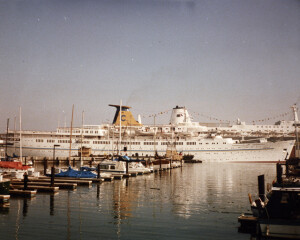 | 1961-1980 | originally MV Lisboa, then Starlight Express, Baltica, Princess Danae. | Steamship Danae | MS0731/-#02 | |||||
| 8 | 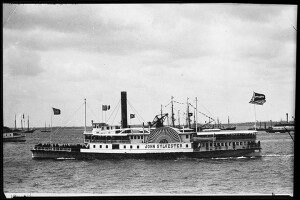 | After 1865-Before 1916 | John Sylvester (Side wheel steamer : 1866). | "John Sylvester"/1866/later "Starlight"/"Favorite"/New York Harbor | Broadside of the John Sylvester underway. | MS0091/03.01-28#118 | ||||
| 9 | 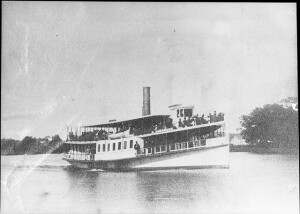 | 1883-1931 | Granite City (Steamboat : 1890). | Granite City" 1890, later "Starlight" | Steamboats–United States. | Shows a starboard side view of the bow of a steamboat making way. | MS0091/03.02-02#1306 | |||
| 10 | 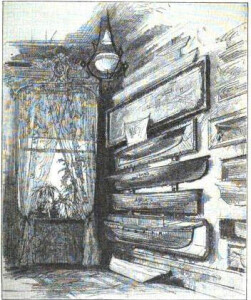 | SHORT DESCRIPTION: Builder’s half hull model, port side, made by George Steers of the pilot boat Anthony B. Neilson. The model is a basic representation of the vessel's molded lines, without constructional details. The model is not mounted on a backing board. The model is varnished and inscribed in black-outlined letters “ANTHONY B. NEILSON.” The model has a slightly raked stem and a raked hourglass shaped upper stern (no counter). It has moderate deadrise and little or no tumblehome. The model depicts a boat with deep draft aft and a keel that slopes up to the forefoot. It has a long sharp entry and a long run aft. The model is constructed of 13 lifts. The bottom lift (1) is 1-1/16” and tapers to 0” about 14-1/4” from the bow. Lifts 3 through 10 are flat and arranged in pairs, each pair consisting of a 9/16" lift, possibly of pine and a 1/16" lift of a darker wood, possibly cedar. The sheer curve is cut into the 11th lift. It is 9/16” amidships, 2-1/8” at the stern, and 1-7/8” at the stem. There are two flat lifts above it that curve with the sheer. Lift 12 is a uniform 1/16” across the model while lift 13, the top covering for the model, is ¾” amidship, 7/8” at the stem, and 1/16” at the stern. The dimensions of the model are 39-1/4” (length overall); 4-7/8” (main breadth), 4-5/8” (half breadth), leaving a tumblehome of just 1/4”. Height overall is 5-15/16” (at the stern). The minimum half-breadth of the model is 1/16" along the edge of the stem and 1/8” at the stern. How the lifts are held together is not readily apparent. There are a few variously sized holes whose purpose is not apparent on the top and back of the model. The most obvious visible damage are at the bottom two lifts which look as though both lifts were broken off and reattached at some point. Lift 7 has a minor loss at the bow. There are several significant scratches around the name and close to the bow. The varnish remains in good condition. There are some minor losses to the bow and along the top of the upper stern. NOTES: The collection of half models MR 5 through MR 24 are of vessels built by shipbuilders Henry (father), James Rich and George (sons), and Henry Steers (son of James Rich), builders of the famous yacht America. The models document vessels built between 1805 and approximately 1876. They encompass all types of vessels from a catboat up to large steam sloop built for the US Navy. In a February 13, 1963 letter Howard I. Chapelle, Curator of the Division of Transportation at the Smithsonian stated “The Steers Collection is important technically and it is something we envy the Mariners’ Museum’s possession.” NOTES: The New York Pilot boat Anthony B. Neilson was the last pilot boat built by the Steers and Hawthorne Yard, in Williamsburg, N.Y. • “Ten feet longer than the pilot boat George Steers." - Rudder, January, 1906. • Boat was named after Anthony Bleecker Neilson (1801-November 6, 1860) a well-known New York merchant and a prominent businessman in New York. At the time of his death he was the president of the Sun Mutual Insurance Company and also of the Board of Underwriters. VESSEL NAME: ANTHONY B. NEILSON, NO. 21 VESSEL TYPE: Pilot schooner, New York Pilot Boat No. 21 in 1855 DESIGNER: George Steers BUILD DATE: 1852? BUILDER LOCATION: NEW YORK VESSEL HISTORY: • Charleston Daily Courier, September 20, 1854 reported: A. B. Neilson anchored off the point yesterday after a cruise of shore in which she encountered a late heavy NE gale. On the 11th, fell in with schooner Marietta, from New Orleans leaking badly, foresail split and her bulwarks gone. • Thibodaux Minerva (Thibodaux, Louisiana) October 7, 1854 reported: Capture of a bald eagle at sea.—A dispatch to the New York Courier and Enquirer, from Sandy Hook, says that on the 12th inst., at sea, a bald eagle, measuring over sixteen feet across its wings, alighted on the gaff of the pilot boat A.B. Neilson, apparently exhausted by a long flight, and was captured by Mr. Bailey, one of the pilots, and is now in captivity on board. The nearest land eastward, from which the bird must have been blown off, was over a hundred miles distant. • Brooklyn Daily Eagle, January 22, 1855 reported: the Anthony B. Neilson rescued the crew of the barque Howling Wind of Warren, Maine which had sailed from Philadelphia on January 18th with a cargo of grain. After passing the Capes of the Delaware it was discovered that the vessel leaked badly. The crew manned the pumps and threw a portion of the cargo overboard but could not gain on the leak. She was discovered by the pilot boat completely waterlogged with the pumps choked by grain and the decision was made to abandon her. • At some point the Anthony B. Neilson was captained by Thomas Aitken. • New York Tribune, February 25, 1856 reported: the A.B. Neilson, No. 21, supplied the schooner Cennovie with provisions on February 21st, on February 22nd the schooner fell in with the Hamburg ship Sir Robert Peel and supplied her with provisions and water. • The Times-Picayune (New Orleans), October 27, 1856 reported: Loss of a pilot boat.—the pilot boat Julia, No. 15, of New York, was run into on Saturday night, the 18th inst., off the Light Ship, by pilot boat A.B. Neilson, No. 21, and cut in two and sunk. All hands saved. • Description of collision with pilot boat Julia: on the 19th of October, 1856, the pilot boat, under the command and in the employment of the libellants, was allotted to keep station near the Hook, in conformity to the by-laws of the board of commissioners of pilots; and in violation of their duty in that respect, she was that evening removed from that station seven or eight miles, and employed in cruising for vessels outside the Hook, and between eight and nine o'clock in the evening she encountered the collision which is the subject of this action. The Julia was lying to, under headway of about 1¼ knots the hour, heading S. S. W., the wind W. S. W., and moderate. It was a dark starlight night, but a thick cloud or bank lay in the S. E., towards which the two vessels were steering. The Julia had two hands in charge of the deck, the rest of the crew having their watch below; one of these assigned to her charge was a lad of 17 years old, and the other, an able seaman. The boy had charge of the helm, and the other was below, when the schooner A. B. Neilson was discovered from the Julia approaching on her starboard side, from the north, the two vessels then being 3 or 4 miles southerly of the station ship, and running pretty much in the same direction. No light was on the Julia except a small handlamp, standing in the binnacle, and there was no lookout on deck. The man below was nailed by the boy, and told that a vessel was approaching; he answered the hail, but not coming on deck, the boy shortly after caught the binnacle lamp, and ran forward, calling again earnestly that a vessel was coming right at her, when the man came out, took the lamp from the boy, and held it out over the railing, as a warning towards the Neilson. The light was then first seen on the Neilson, but she was too near the Julia to be able to avoid her. The Neilson was well manned, with a competent lookout upon deck, stationed about midships, and as far forward as is usual in small vessels, and as far as could be and keep out of the spray thrown over her bows, and he was moving backwards and forwards, and across the deck, looking out attentively in all directions. She also had a lantern lighted, and in good order, suspended in the shrouds, 10 or 12 feet above the deck. The Julia was not seen from her until the binnacle lamp was held out as a warning, and when the two vessels were nearly in contact, and too late for anything to be successfully done on board either to avoid the collision. The Julia was struck on her starboard side, and shortly after went down, and became a total loss. • New York Daily Herald, February 1, 1857 reported: The pilot boats AB Nelson and Nettle were in contact off Sandy Hook on Friday evening. The former had her bowsprit carried away; the latter received no damage. • The U.S. Nautical Magazine and Naval Journal of March 1857 indicates the A. B. Neilson was driven ashore by ice on Long Island above the Narrows. • Times-Picayune, September 10, 1859: George Steers Last Pilot Boat Sold: Under this heading the New York Times notices the sale and the history of the new pilot boat, “A. B. Neilson,” which has just arrived in our waters: The pilot boat A. B. Neilson, belonging to the New York and Sandy Hook pilots has been purchased by a company of New Orleans pilots, to be used as a pilot boat at the Balize. She ranked No. 21, and was the fastest boat engaged in the piloting business, the only vessel that could compete with her being the George Steers, which was also built by him whose name she bears. The Neilson, however, was the last pilot boat which he built, and, like all the vessels turned out from his master hand, was unrivaled as a fast sailing and as a sea boat. She was built in 1854 for a company of five Sandy Hook pilots, of whom Capt. John F. Clark was the head. The New Orleans people having secured the fastest towing steamer we had in this port, the W. H. Webb, were so well pleased with the productions of the New York ship yards that they determined, also, to have the fastest pilot boat. The owners were offered a liberal price for the boat, and although the sale of her subjected them to much inconvenience and delay, a majority were induced to consent to the sale. Some of the company, however, insisted that only one side of her was paid for. During the last two regattas in this harbor she accompanied the fleet as an outside boat, and proved herself more than a match for some of the best sailers in the squadron. She sailed for New Orleans on the 20th of August, in charge of Capt. George Benson, her new owner. The New Orleans pilots have gained, but the Sandy Hook pilots have lost one of the most serviceable and efficient vessels ever employed in the piloting business. • Times-Picayune, February 9, 1867: The pilot boat A.B. Neilson is ashore near the bayou, the sea making a clean breach over her; she lies easy. • Times-Picayune, October 9, 1867: The pilot boat A.B. Neilson was uninjured in a hurricane that occurred on the 5th and 6th. • Times-Democrat, April 26, 1873: Reports schooner A.B. Neilson had sailed from Southwest Pass (doesn’t appear to be a pilot boat at this point.). May 31st the captain listed as Monastero and delivering a cargo from Ruatan to J. Macheca & Co. and S. Oteri. • New Orleans Republican, July 8, 1873: Schooner A.B. Neilson delivered 1500 bunches bananas, 8325 plantains, 7500 coconuts, 2000 pineapples, 10 bbls lemons and 1bbl mangoes from Ruatan Island. (listed at 61 tons and master as Nevares the following day) • New Orleans Republican, October 31, 1873: cleared for Ruatan Island. • Sailed again on November 2, 1873. • New Orleans Bulletin, June 12, 1874: Imports from Ruatan Island per schooner A.B. Neilson-700 bunches bananas 1000 pineapples K. Morgan & Co. The same paper reports on July 10, 1874 the vessel, captained by Monastero was headed for Puerto Cabello with 22 bbls flour 3 tcs bacon 25000 feet lumber and 15000 shingles ADDITIONAL INFORMATION: SEE: "George Steers - men who have made yachting." Rudder. 1906. Volume XVII. page 53.; SEE: Sheldon, G.W. "The Old Ship-Builders of New York". Harper's Magazine. July 1882, page 224-241.; SEE: "The Shipbuilders of America: George Steers". The U.S. Nautical Magazine and Naval Journal. July 1857. Volume VI. Number 4. | CL14540 | |||||||
| 11 | 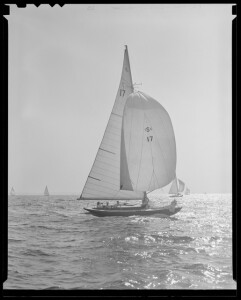 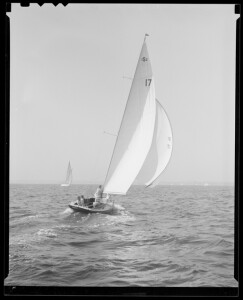 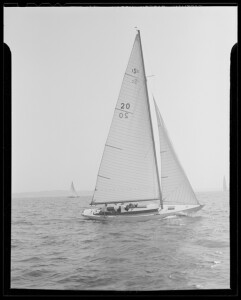 | 1937-1939 | Indian Harbor Yacht Club–Photographs.; International Star Class Yacht Racing Association–Photographs. | Yachts–Photographs.; Yachting–Photographs.; Yacht clubs–Photographs.; Yacht racing–Photographs.; Sailboats–Photographs.; Motorboats–Photographs.; Sloops–Photographs.; Regattas–Photographs. | Contains photographic negatives of the Indian Harbor Yacht Club and the Indian Harbor Yacht Club Regatta, the yacht Comeback, the yacht Rondine, unidentified Atlantic class vessels, the yacht Jamie, the yacht Bob Cat, unidentified International class vessels, the yacht Imp, the yacht Maid of Honour, the yacht Freya, the yacht Four Winds, the yacht Ginch, the International class vessel Javelin, the yacht Brendy, the yacht Jick, the yacht Jester II, the yacht Picaroon, the yacht Bobbill II, the yacht Feather, the yacht Mary, the yacht Mary Mac, the power yacht My Girl III, the yacht Three Seas, the power yacht Penguin, the yacht Tin Hana, the Star class vessel Starlight, and the auxiliary sloop Alphisle. | P0002.001/50-112 | ||||
| 12 | 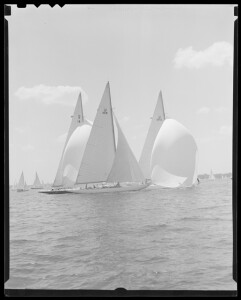 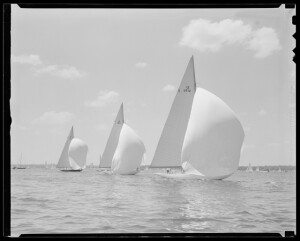  | Circa 1920 | Larchmont Yacht Club (Larchmont, N.Y.)–Photographs.; International Star Class Yacht Racing Association–Photographs. | Larchmont (N.Y.)–Photographs. | Yachts–Photographs.; Yachting–Photographs.; Yacht clubs–Photographs.; Yacht racing–Photographs.; Sailboats–Photographs.; Motorboats–Photographs.; Regattas–Photographs. | Contains photographic negatives of the Larchmont Yacht Club and the Larchmont Regatta, various class races at Larchmont Race week, unidentified International class vessels, the International Star Class race at Larchmont Race week, the International class vessel Flicker, the yacht Brendy, the International class yacht Intruder, the International class yacht Canvasback, the International class yacht Frolic, the International class yacht Bobbill II, the International class yacht Aileen, the International Star class yacht Starlight, the yacht Tempe II, the yacht Jay, and various unidentified Star class vessels. | P0002.001/50-061 | |||
| 13 | 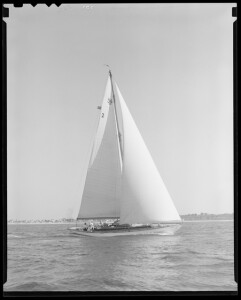 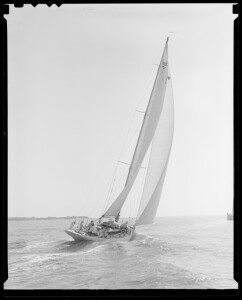  | 1938-1939 | New London (Conn.)–Photographs.; Marblehead (Mass.)–Photographs.; Annapolis (Md.)–Photographs. | Yachts–Photographs.; Yachting–Photographs.; Yacht racing–Photographs.; Cutters–Photographs.; Sailboats–Photographs.; Motorboats–Photographs.; Regattas–Photographs. | Contains photographic negatives of the New London to Marblehead Race and the New London to Annapolis Race, the auxiliary cutter White Lady, the yacht Bidgee, the yacht Offshore, the yacht Escapade, the yacht Estrella, the yacht Home Run, the yacht Lone Star, the yacht Mandoo II, the yacht Seahorse, the yacht Silvana, the yacht Silcana, the yacht Starlight, the yacht Stormy Weather, and the yacht Vamarie. | P0002.001/50-090 | ||||
| 14 | 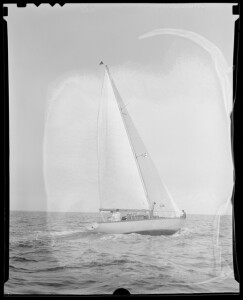 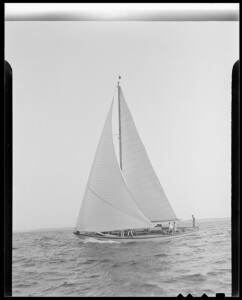 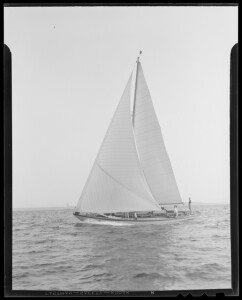 | 1937-1939 | Knickerbocker Yacht Club–Photographs.; Stamford Yacht Club–Photographs. | Stamford (Conn.)–Photographs.; Port Washington (N.Y.)–Photographs. | Yachts–Photographs.; Yachting–Photographs.; Yacht clubs–Photographs.; Yacht racing–Photographs.; Sailboats–Photographs.; Motorboats–Photographs.; Yawls–Photographs.; Schooners–Photographs.; Cutters–Photographs.; Ketches–Photographs.; Sloops–Photographs.; Regattas–Photographs. | Contains photographic negatives of the Stamford Yacht Club and the Stamford Vineyard race, the yacht Perroquet, the vessel Rissa, the vessel Risocco, the vessel Soerabaja, the vessel Starlight, the vessel Tioga Too, the vessel Alera, unidentified 25 meter vessels, the vessel Neap Tide, the Knickerbocker Yacht Club and the Knickerbocker Regatta, the yacht Evening Star, the vessel Blue Water, the auxiliary yawl Cossack, the auxiliary sloop Chiloe II, the power yacht Episode, the auxiliary schooner Fawn, the auxiliary schooner Freedom, the auxiliary ketch Falcon, the auxiliary schooner Jesting II, the auxiliary cutter Kittiwake, the auxiliary cutter Lady Maude, the auxiliary ketch Linnea, the auxiliary yawl Menemsha, and the auxiliary schooner Manana. | P0002.001/50-108 | |||
| 15 | 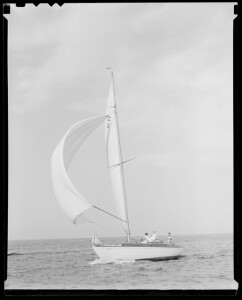 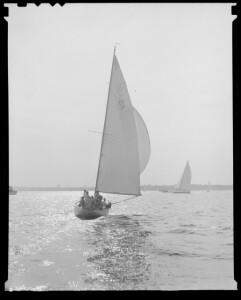 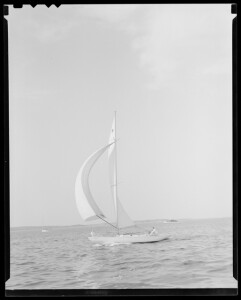 | 1937-1939 | Larchmont Yacht Club (Larchmont, N.Y.)–Photographs.; International Star Class Yacht Racing Association–Photographs. | Larchmont (N.Y.)–Photographs. | Yachts–Photographs.; Yachting–Photographs.; Yacht clubs–Photographs.; Yacht racing–Photographs.; Sailboats–Photographs.; Motorboats–Photographs.; Boaters (Persons)–Photographs.; Regattas–Photographs. | Contains photographic negatives of the Larchmont Yacht Club and Larchmont Race Week, unidentified Coastwise Cruise class vessels, unidentified International Star class vessels, the Star class vessel Gay, the beginning of the Atlantic Coast class race, unidentified man fixing spinnaker, unidentified Atlantic Coast class vessels, the Atlantic Coast class vessel Jamei, many unidentified sailing vessels and the yacht Indian, the Atlantic Coast class vessel Wyvern, unidentified vessels at the Larchmont Yacht Club race, the Star class vessel Starlight, unidentified Sea Bird vessels, the Sea Bird vessel Snapper, the vessel Coot, the vessel Tiny Teal in dry dock before launching, men and women at the launching of the vessel Tiny Teal, harbor scenes, unidentified men aboard the vessel Tiny Teal, dockyard scenes, and a shot of an unidentified woman at the wheel of a yacht taken for Cue magazine. | P0002.001/50-098 | |||
| 16 | 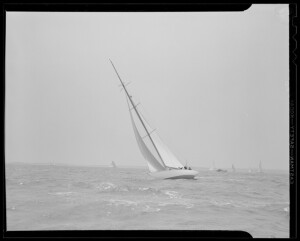 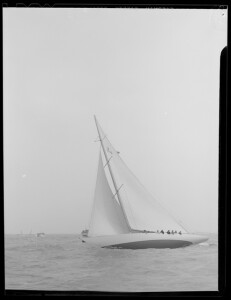 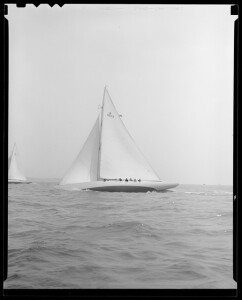 | 1938-1939 | Knickerbocker Yacht Club–Photographs. | Port Washington (N.Y.)–Photographs. | Yachts–Photographs.; Yachting–Photographs.; Yacht clubs–Photographs.; Yacht racing–Photographs.; Sailboats–Photographs.; Motorboats–Photographs.; Sloops–Photographs.; Cutters–Photographs.; Yawls–Photographs.; Ketches–Photographs. | Contains photographic negatives of the Knickerbocker Yacht Club and the Knickerbocker Yacht Club Regatta, the 12 meter class yacht Nyala, unidentified sloops and auxiliary sloops, the 8 meter class yacht One Design, the yacht Blue Sky, the yacht Old Salt, unidentified Weekender class vessels, the Handicap class yacht Rascal, the yacht Chaperon, the sloop Imp, the sloop Four Winds, the sloop Elsalan, the sloop Alegra, the sloop Jester II, the sloop Susan, the sloop Bobbill II, the sloop Feather, the Handicap class sloop Anita, unidentified auxiliary yawls, the auxiliary yawl Clemencia, the auxiliary cutter Java Head, the auxiliary sloop Murrelet, the sloop Pellegrina, the sloop Sachem, the auxiliary cutter Starlight, unidentified auxiliary ketches, and the auxiliary yawl Windigo. | P0002.001/50-084 | |||
| 17 | 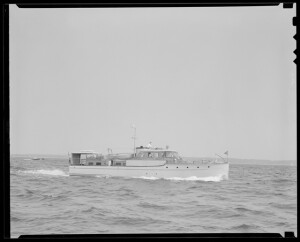 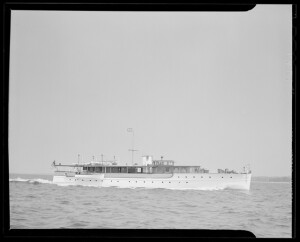 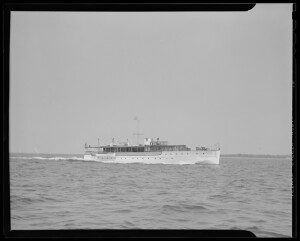 | 1938-1939 | New London (Conn.)–Photographs.; Annapolis (Md.)–Photographs. | Yachts–Photographs.; Yachting–Photographs.; Yacht racing–Photographs.; Sailboats–Photographs.; Motorboats–Photographs.; Regattas–Photographs. | Contains photographic negatives of the New London to Annapolis Race, the power yacht Alexander Botts, the power yacht Almina, the yacht Aquaria III, the yacht Heaven II, the power yacht Cilleen, the power yacht Courageous, the power yacht Cintra, the power yacht Firefly, the power yacht Firenze, the power yacht Gaf, the power yacht Hel N How, the power yacht Helen Virginia, the yacht Jean W II, the power yacht Karina, the power yacht Kaylou, the power yacht Little Gem, unidentified power yachts, the power yacht Mahana, the power yacht Maloha, the power yacht Martha D, the power yacht Melba, the power yacht My Girl III, the power yacht One, the power yacht Nashira, the power yacht New Life III, the power yacht Peregrine II, the power yacht Randa, the power yacht Ranley, the power yacht Rosalind, the yacht Saga, the power yacht Sea Play, the power yacht Shelter, the power yacht Slip Stream, the power yacht Sonny Too, the power yacht Starlight, the power yacht Stowaway, the power yacht Teddy III, the power yacht Velaim II, the power yacht Wa Wa, the power yacht Whiser, the power yacht Whickmar, power yachts towing sailing yachts, and variou unidentified sailing and power yachts at the New London to Annapolis Race. | P0002.001/50-091 | ||||
| 18 | 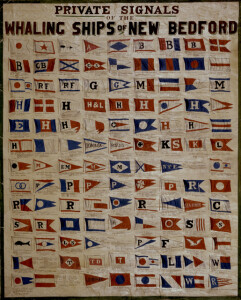 | SHORT DESCRIPTION: Oil painting on canvas by C. Newton titled 'Private Signals of the Whaling Ships of New Bedford.' There are many company/merchant flags shown with the names of their vessels and dates of operation underneath each flag. Looking at the dates of the vessels the painting appears to have been created sometime in the 1840s and received modifications as new ship's were added to each. There do not appear to be any entries made after 1869. NOTES: For information, see New Bedford Whaling Museum finding aids. Newspaper and other references found in object file. Gideon Allen and his brother, William, were whaling agents and investors from 1830 to 1887. Philip Anthony worked as a ship chandler and sold hardware at 91 Union in the 1841 New Bedford City Directory. He owned ship Menkar from at least 1845 to 1854. James Arnold was a merchant at Rotch's square. He owned the ship Cambria, which transported Frederick Douglass in 1847. George F. Barker and Abraham Barker were merchants at 117 Union in the early 1840s, also sold provisions and groceries from that address. Chapman & Bonney existed in at least the 1850s. In 1854 they purchased the schooner Union to be rigged as a brig and used in the North Atlantic whale trade. In 1859 their sail lofts burned in a fire. Coggshall should be spelled Coggeshall Cook & Snow was a partnership between Thomas Cook (1801-1890) and Loum Snow that began in 1828. They were wholesale and retail dealers in dry goods, merchant tailors, and outfitters, but also became involved in whaling trade. Snow left the partnership in 1859 and started his own company; his son joined him in 1867 to create Loum Snow & Son. Cornell & Penniman are listed in this painting as agents for bark Eliza in 1857, they were still agents for her in 1860. Oliver & George O. Crocker were brothers. In 1841 the firm of George O. Crocker & Co. had George T. Baker and Oliver Crocker as partners, and David Crocker as a laborer. They were merchants operating from 7 Commercial wharf. By 1843 the partnership between Baker, Crocker, & Co. of Boston and George O. Crocker & Co. of New Bedford had dissolved, leaving Baker to partner with Edmund Whitney to create Baker & Whitney selling sperm oil, candles, and other general commission business from their stores at 80 and 84 Water Street, which had been the address for Baker, Crocker, & Co. See The Boston Post, February 6, 1843. Elisha Dunbar & Co. was a partnership between Captain Elisha Dunbar and Edward C. Jones. Elisha Dunbar married Ann Howland in 1820, the daughter of John Howland Sr., who built them a house at 46 South Street. Edward Coffin Jones began his career as a stock boy, who worked his way up to being a ship owner and partner. When Dunbar died in 1839 Jones continued the firm alone. William Watkins worked for the company before starting his own (see below). John P. Knowles worked as a partner with T. & J.P. Knowles with Thomas. By 1887 The Boston Globe reported that John P. Knowles 2d was a ship merchant who was in debt. In 1890 the newspapers reported him as an insolvent debtor paying 40 per cent dividend. T. Knowles & Co.: Thomas Knowles worked with John P. Knowles and Joseph Knowles in th 1849 directory as dealers in groceries, provisions, dry goods, etc. at 24 Union. Jos Dunbar & Co. was Joseph Dunbar, a mercantile and whaling agent company. Henry F. Thomas (born 1824) worked for his father then joined Dunbar as a clerk and worked his way up to being a partner in 1845. He took control from 1850 to 1875. The company is listed in the 1836 and 1841 directories located at 9 Middle with Asa T. Lawton as a partner. Rodney French (1802-1886) was a quaker and merchant. He was an abolitionist who supported the Civil War. He won the 1853 mayoral election for New Bedford and a street in New Bedford is named Rodney French Blvd in his honor. William Gifford was a whaling agent for the ships Charles Drew, Minerva, and bark William Gifford. His son, Charles H. Gifford, became a partner and the company name became William Gifford & Son. William died in 1866 and Charles continued the company for a few years. Lawrence Grinnell was a whaling agent who began his career in the counting room of Fish & Grinnell in New York (which later became Grinnell & Minturn, see QO 1030 and QO 1024). He returned to New Bedford to work as a whaling agent, sold sperm oil and candles, and worked with the Mutual Life Insurance Company of New York. Hathaway & Luce was a partnership between William Hathaway Jr. (1798-1885) and Matthew Luce (circa 1802-1852) in 1838. Hathaway was a sailor who became master, and was well traveled. When he partnered with Luce they worked as agents and commission merchants until Luce died in 1852. Hathaway continued the company until the Civil War when he sold several ships and had a few captured by the Confederates. T.S. & F.S. Hathaway was Thomas Schuyler Hathaway (1796-1821) and Francis S. Hathaway (1803-1869). Their father, Humphrey Hathaway (1765-1821) was a ship builder and involved in the whale oil industry. A third brother, Nathaniel, was also a partner until his death in 1836; two of his sons became partners later in life. A.H. Howland was Abner Howland, whose family was very active in the New Bedford whaling industry and also very wealthy. He is a nephew of John Howland Sr., and Abner's home still stands at 22 South Sixth Street. Edward Wing Howland was a whaling agent, owner, and also outfitted whaling vessels in partnership with his brother, Cornelius, and his nephew, George Howland Barney. Edward died in 1879. George & Matthew Howland: George Howland Sr., was a whaling agent who eventually owned nine whaling vessels, a counting house, a wharf, a candle factory, stores, houses, and land. His daughter used his home at 245 Walnut Street to educate fugitive slaves. The home was built as a wedding gift in 1811, and on the wedding day George and his wife Susan watched the launch of the ship George & Susan from their front porch. Frederick Douglass worked for him as a young man. Lemuel Killock & Son should be spelled Lemuel Kollock. He was a ship chandler and grocer in the 1841 city directory, at 3 Whaleman's slip at the corner of Central wharf. Issac Howland Jr. & Co. should be Isaac Howland Jr. & Co. His father, Isaac Howland Sr., began a company where Jr. worked until it failed, but he managed to stay involved in the industry and start his own company. Isaac Jr.'s daughter, Abby Howland, married Edward Mott "Black Hawk" Robinson in 1833 and he took control of the company when Isaac Jr. died in 1834. Robinson was known for his ruthless business tactics and grew the company into a strong, successful venture that made them very wealthy. His daughter, Hetty Green, learned the finances from her father and became the wealthiest woman in America when she died in 1916. Green was known for her stingy financial practices, neglecting medical care for herself and her children to save money. Her son wound up with an amputated leg. John & James Howland were brothers. James started his career at sea but barely survived several dangerous voyages so he retired to life on shore to work with John. James built a house between 1808 and 1815 at 21 South Sixth Street that still stands, but at one time had an observation tower in the yard so that he could still watch the harbor. Charles Waln Morgan lived from 1796 to 1861. He partnered with William Rotch Sr. and Samuel Rodman Sr. as merchant shippers, then worked for himself from 1819 until his death. He owned all or part of numerous whaling vessels.. T. & A.R. Nye were Asa R. Nye and Thomas Nye, Jr. They were merchants at 8 Middle Street in the 1836 and 1841 city directories. Frederick Parker lived from 1806 to 1861, son and partner of prominent whaling merchant John Avery Parker. John hired William Phillips in 1825 and his son, George R. Phillips, in 1848. John died in 1853 and Frederick continued the company. When Frederick died William and George continued the company under the name of William Phillips & Son (incorrectly spelled twice in painting as Philips). Jireh Perry was a merchant with a counting room at 11 Middle Street in the 1841 directory. Ebenezer Perry appears in the record as his son, and Pardon Tillinghast was a partner. Lorenzo Peirce was a cooper who eventually owned 3/4 of the bark Addison from 1860-1867. Pope & Morgan: Samuel Griffitts Morgan was the nephew of Charles W. Morgan and worked as a clerk for his uncle until partnering with William G.E. Pope in about 1836. The 1841 city directory has Pope & Morgan as commission merchants and dealers in duck, iron, etc. in Rotch's Square. Andrew H. Potter was a clerk for the Register Office in 1841. By 1861 the New York Times reported that he worked for A.H. Potter & Co. and was arrested for his part in outfitting the ship Brutus for carrying slaves. Chas. S. Randle may be Charles S. Randall, who went on to be a politician. Thomas Riddell partnered with Thomas R. Dix as merchants with a counting room at 29 Rotch's Square. Barton Ricketson was partnered with Charles Wood, merchants at 31 Centre in 1841. Samuel W. Rodman was a leading manufacturer of cotton goods. The 1841 directory has his office at 3 Rodman, by 1842 he built a large house with a guest house at what is now 35 Seventh Street. The Rodman family had been involved in the whaling industry since 1798 when Samuel Rodman Sr. started working as a merchant, banker, an invested in textile mills. His sons were Samuel Rodman Jr. and Benjamin Rodman. Samuel Jr's son, Thomas Rotch Rodman, also worked for the company. Thomas worked in his father's whaling ventures, then fought in the Civil War before working for the Wamsutta Mill that his father and uncle funded. William Rotch Rodman lived at 388 County Street, built between 1833 and 1836. The Rotch family was another prominent, highly successful whaling family in New Bedford. It began with William Rotch Jr. in 1787, who had worked for his father's counting house in Nantucket. He taught his sons, William Rodman Rotch, Joseph Rotch, and Thomas Rotch, who all worked as whaling agents. Joseph's son, William James Rotch, attended Harvard, founded the New Bedford Cordage Company with his brother, and became mayor. William James married two of Charles W. Morgan's daughters. O. & E.W. Seabury were Otis and Edward W. Seabury, outfitters and agents for whaling ships. Several brothers were also involved in the whaling industry and occasionally contributed to the business. They were Humphrey W., Charles Pinkney, William Harrison, and Jason. Swift & Allan should be spelled Swift & Allen. They were ship chandlers, agents, and commission merchants from 1842 to 1891. Frederick Slocum Allen had worked with Thomas C. Lothrop from 1832 to 1836, then with Ireneus Gooding from 1836 to 1841. He then partnered with his brother-in-law, Jireh Swift, to create Swift & Allen. Their decline began with the Civil War and the company closed for good in 1891. W.C.N. Swift & Eben Perry were William Cole Nye Swift and Eben Perry. The partnership began in 1849, they hired William H. Aiken in 1865, and they hired Frederick Swift (W.C.N.'s son) in 1875. Aiken and Frederick Swift took over control in 1879 and the name became Aiken & Swift, which eventually moved operations to San Francisco by the 1880s. Aiken died in 1893 but Frederick Swift continued working. Oben N. Swift should be spelled Obed N. Swift. He worked with W.C.N. Swift (see above) as live oak contractors at 56 Fifth Street in 1841, prior to W.C.N.'s partnership with Eben Perry. The Taber family is another with long connections to the New Bedford whaling industry. Henry Taber went to sea in 1809 and by 1832 was working as a ship chandler and grocer as Henry Taber & Co. He partnered with David Sherman, then with his son, William Gordon Taber, then with his son-in-law John Hunt. When Henry Taber retired in 1866, William G. Taber and William Gordon Jr. took over and changed the name to Taber, Gordon & Co. Other family members involved in the whaling industry include Henry Taber's cousins, Francis Taber and George Russell Taber, who operated as F. & G.R. Taber, as well as Francis' son, Robert Holloway Taber. Thomas & Dow was a partnership between Sylvanus Thomas and William F. Dow, which had financial difficulties in 1846. Dow also worked as principal of the William Street Boys' School, and Thomas worked with Zephaniah Eddy as Eddy & Thomas in at least 1841. Thomas later created Sylvanus Thomas & Co., and hired George S. Homer in 1859. Homer became a partner by 1867 and partnered with his brother, Frederick, after Thomas died. The company existed into the 1870s. West & Paine started in 1816 by John P. West. It became West & Paine when Samuel S. Paine joined, then S.S. Paine until 1861 when Paine's brother, George Paine, joined and the name changed to S.S. Paine & Bro. They were dealers in brick and lime at 12 Hazard's wharf. John P. West's son, Simeon N. West, was also a whaling agent. W. & G.D. Watkins started in 1840. William Watkins had worked for Elisha Dunbar until that company closed and he started his own. It became William & George D. Watkins from 1851 to 1862. In 1878 George bought the company and partnered with Jonathan Handy to create Watkins & Handy. Tucker & Cummings was a partnership between Charles Smith Cummings and his brother-in-law, Abner R. Tucker in 1853. When Tucker left the company in 1881 Benjamin Cummings joined and the name became C.S. & B. Cummings. Benjamin Cummings also worked with his brother-in-law, Charles H. Gifford, in Gifford & Cummings. Charles Smith Cummings had learned the business from his father and two uncles who were part of William Cummings & Co. Wood & Nye: Willard Nye (1811-1865) started his career with David R. Greene & Co. and was a partner with them by 1836 with Dennis Wood. By 1850 Wood and Nye created their own company as merchants and agents. Nye died in 1865 but Wood continued the company after that. Nye also served as a Representiative twice and Mayor of New Bedford. (See A Genaeology of the Nye Family) | CL12616 |
Created 2026 by Don Barker, CBMM volunteer, for the Chesapeake Shipbuilding Project. shipbuilding@sailingworkboats.es